
The Unresolved Mystery of the Sheep and the Rose
The Little PrinceTraces the narrator's obsessive, unresolved question of whether the Sheep destroyed the Rose, and the cosmic consequences of that uncertainty.
increasing Bearing strength in each event
 decreasing
Bearing strength in each eventdecreasingForgotten Strap
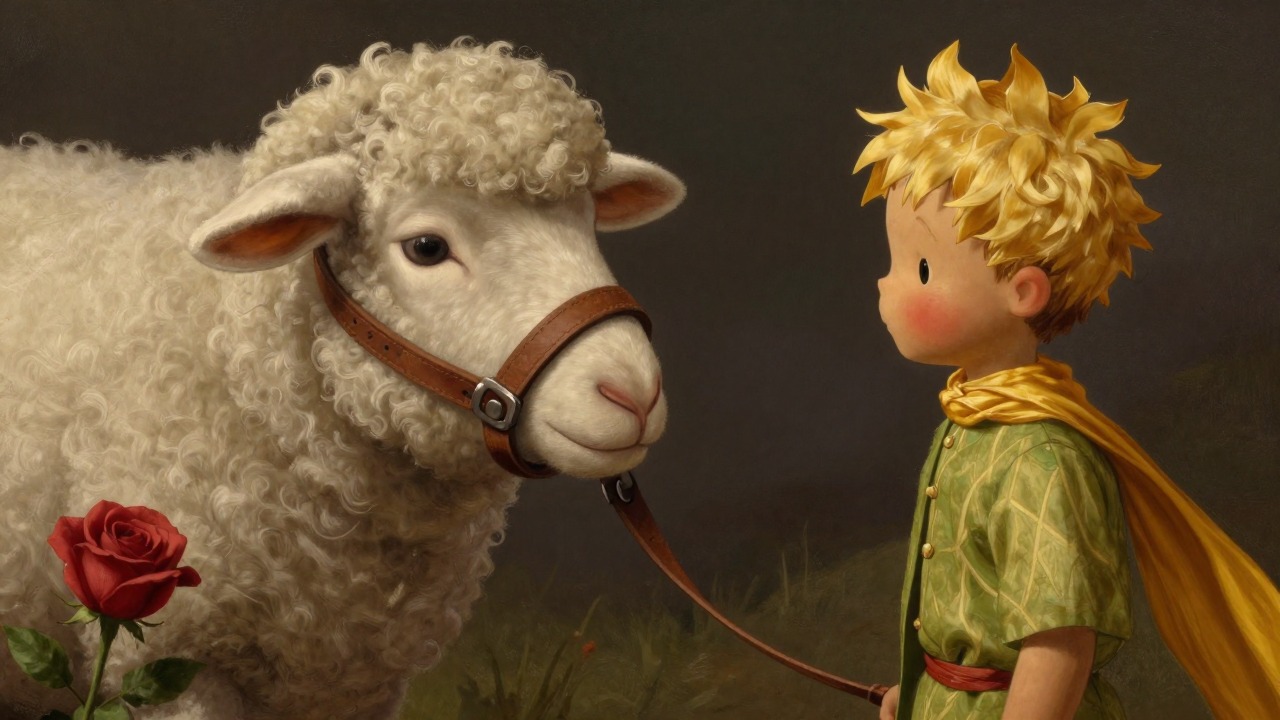
Forgotten Strap
Context
The narrator recalls that when he drew the muzzle for the Little Prince's Sheep, he forgot to add the leather strap. The muzzle was meant to keep the Sheep from eating the Rose, but without the strap it cannot be fastened.
Development
The omission is a pure accident, yet it has an outsized afterlife. The narrator returns to it six years later, still turning the missing strap over in his mind. The drawing itself is innocent; the consequence is cosmic.
Significance
This small error becomes the hinge of the entire epilogue. It introduces chance into a story that yearns for order, and it opens the question of whether the Rose is safe.
First Worry
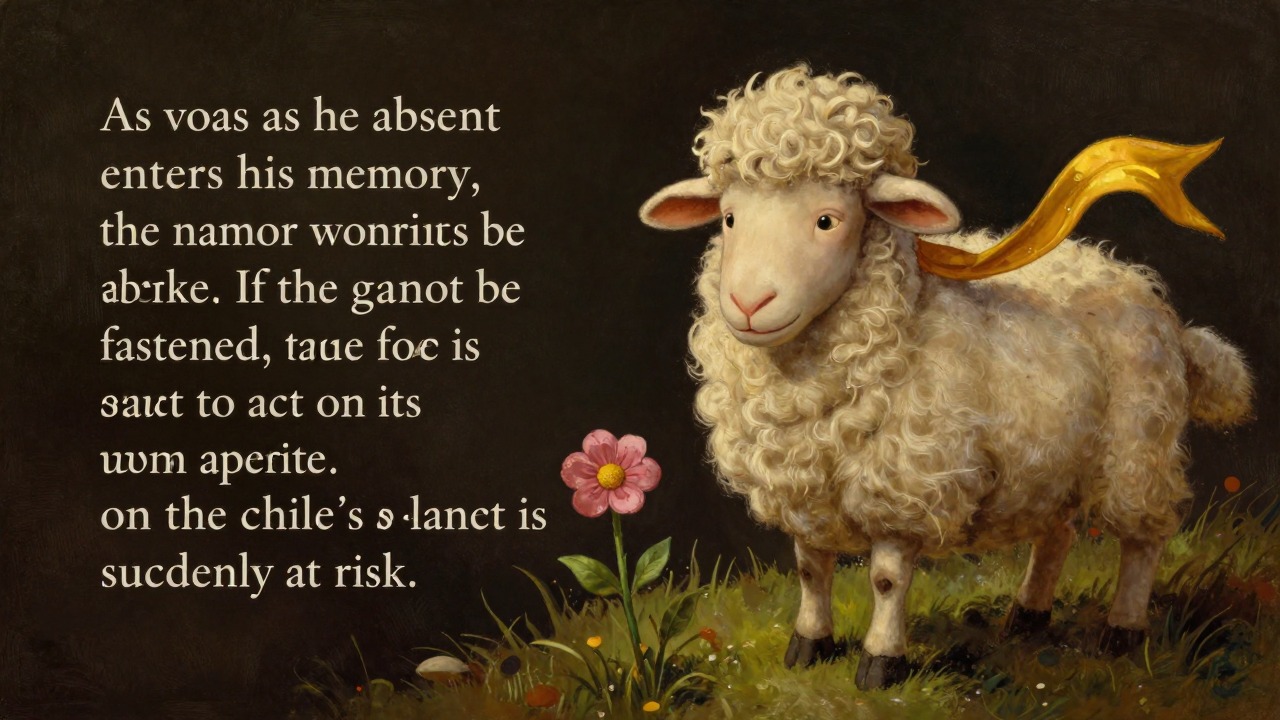
First Worry
Context
As soon as the absent strap enters his memory, the narrator worries about the Sheep. If the muzzle cannot be fastened, the Sheep is free to act on its own appetite. The flower on the prince's planet is suddenly at risk.
Development
The worry is not logical but emotional. The narrator knows the prince covers the Rose every night and watches the Sheep carefully, yet the missed strap plants a seed of doubt. That doubt grows across the years.
Significance
The first worry turns a technical detail into a source of anxiety. It signals that the narrator's mind cannot leave the fate of the Rose alone.
Happy Reassurance
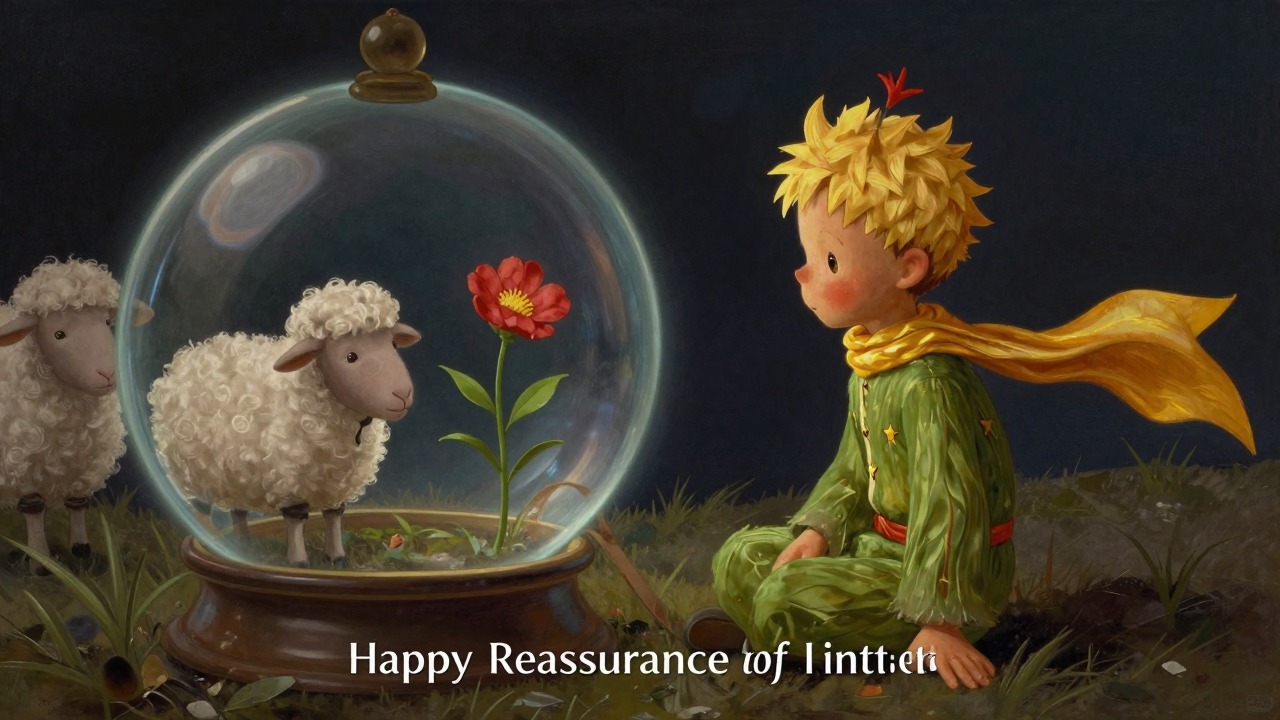
Happy Reassurance
Context
The narrator tells himself that the Little Prince shuts the flower under her glass globe every night and watches over the Sheep very carefully. In this happy scenario, the forgotten strap does not matter.
Development
The image of the glass globe and the watchful prince gives the narrator a feeling of sweetness in the laughter of all the stars. The universe feels ordered, and the stars sound like little bells. This is the consolation of faith.
Significance
The reassurance shows how hope is built on trust in the prince's devotion. The narrator's love for the prince allows him to believe in an invisible happy ending.
Fearful Doubt
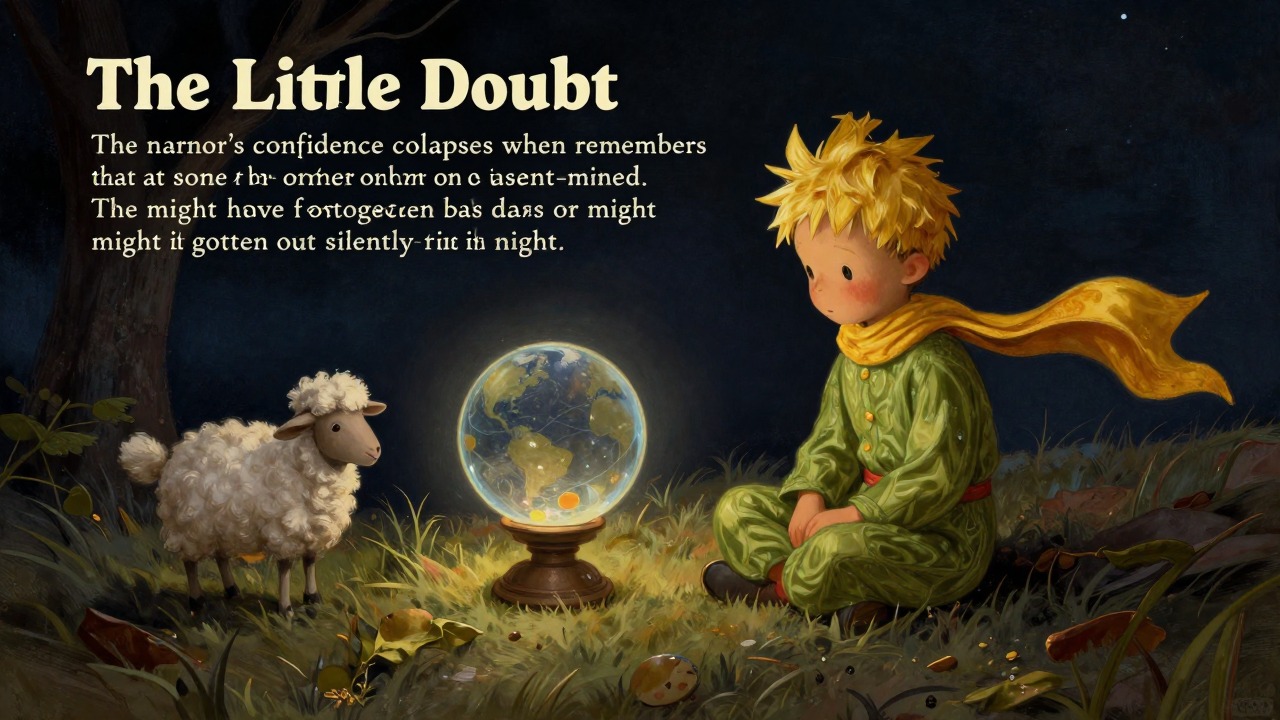
Fearful Doubt
Context
The narrator's confidence collapses when he remembers that at some moment or other one is absent-minded. The prince might have forgotten the glass globe, or the Sheep might have gotten out silently in the night.
Development
The uncertainty is embodied in tiny nocturnal details: a forgotten glass cover, a sheep stepping out without noise. These mundane images are enough to change little bells into tears. The narrator's emotional weather shifts in a sentence.
Significance
Fearful doubt makes the mystery unresolved. It prevents the narrator from ever arriving at a final answer, keeping the question alive in his heart.
Question to the Sky
Question to the Sky
Context
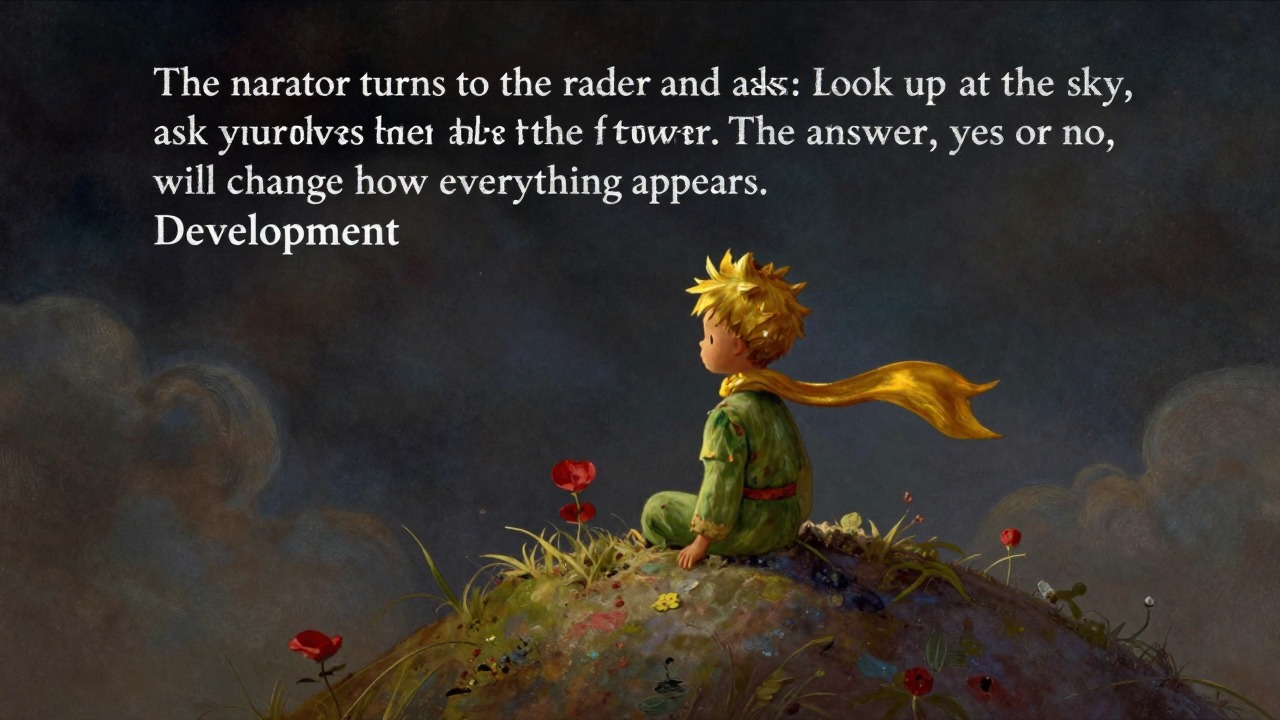
The narrator turns to the reader and asks: look up at the sky, ask yourselves whether the Sheep has eaten the flower. The answer, yes or no, will change how everything appears.
Development
This open question makes the mystery communal. The narrator cannot decide, so he deputizes the reader. The sky becomes a screen on which the unseen event is projected, and each reader supplies the missing answer.
Significance
The question to the sky is the philosophical core of the epilogue. It insists that small invisible events can carry total meaning and that perpetual uncertainty is preferable to careless certainty.
when the narrator drew the muzzle for the Sheep
shortly after the narrator realized the strap was missing
when the narrator imagines the protection rituals working
when the narrator imagines an absent-minded evening
at the end of the narrative, as the narrator invites readers to look up
